

Headstones and their inscriptions can provide clues, telling us more about the person, their interests, or their hobbies. Explore the Grand Canyon Pioneer Cemetery and you’ll find many who appreciated the grandeur of the Grand Canyon in the 19th and 20th centuries. Here are a few of their stories.


John Hance was born about 1838 in Tennessee. After the Civil War he traveled west and settled at the Grand Canyon. He tried his hand at prospecting. He also became a trail builder, guide, and provided shelter for visitors to the Grand Canyon. Over time he became a legendary figure, telling stories of how he dug the canyon himself or how his horse could cross the canyon from rim to rim by galloping on the fog. His stories were implausible, but that was part of his charm, what was expected, and the added entertainment with him as a guide. He led Theodore Roosevelt, who affectionately called him “the greatest liar on earth,” down into the canyon in 1903. In the early 1900s he was housed by the Fred Harvey company in exchange for telling stories until they had a falling out in 1914. At that point, he camped at the head of the Bright Angel Trail until he passed away in 1919. He was the first person buried in what would be known as Grand Canyon Pioneer Cemetery. His brother, George Hance, gives a brief history of his life here.

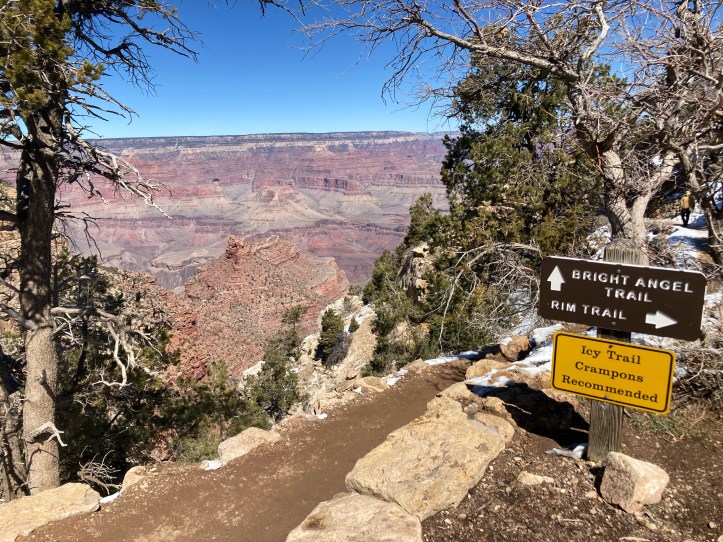
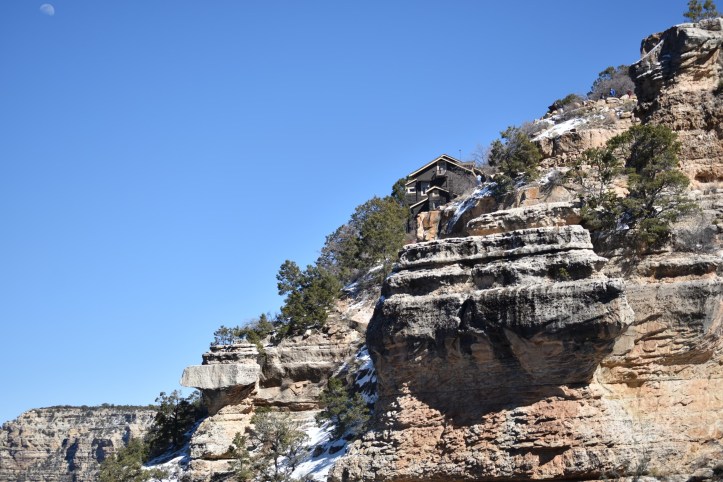
The Kolb brothers, Ellsworth and Emery, came to the Grand Canyon from Pittsburgh in the early 1900s. They established their photography studio at Bright Angel Trail, where they would photograph visitors being taken down the trail on mules. At the beginning they worked out of a tent and had to find creative ways to develop the photographs, using an abandoned mining shaft as a dark room and bringing in water from miles away. Later they built a small frame cabin near the canyon’s edge. This also served as their home. As their studio grew, they expanded their business and built an auditorium onto the studio.

In the winter of 1911, the brothers went on a river trip, filming the first movie of a trip down the Colorado River. The film was shown in the auditorium every day from 1915-1976, being introduced by Emery in to his later years. It is the longest continually running movie in the United States. The adventurous brothers photographed the Grand Canyon in places where tourists didn’t go, dangling from ropes, and scaling unclimbable cliffs. They sold their photographs to tourists and in August, 1914 their photos and experiences were featured in the National Geographic Magazine. Ellsworth left the business in 1915 and Emery continued until his death in 1975. Their headstones are both inscribed with an etching of the Grand Canyon and include these inscriptions:


Ellsworth L. Kolb: “Photographer – Explorer – Author”
Emery C. Kolb: “A hard worker and doer of many things. Photographer – Artist – Explorer – Lecturer”

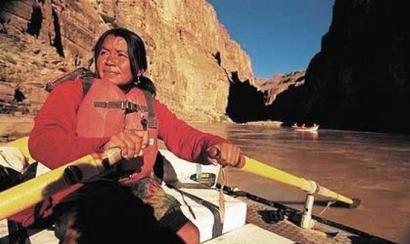
Shana Watahomigie, a Havasupai tribe member, was the first Havasupai woman to be a river runner with the National Park Service. In her obituary it says that “she considered the canyon, the river, and Havasupai Falls her home.” Shana loved “each stroke of the paddle and life in the water she ran. River guiding was one of the biggest accomplishments and joys…; it was something that filled her with life.” She was the river guide for Robert F. Kennedy, Jr. and explorer/author Wade Davis on an 18-day water conservation expedition on the Colorado River. Filmmakers joined them and their mission to inspire and educate to promote water conservation, which is needed to keep rivers like the Colorado from running dry. Her headstone includes the inscription, “whose laugh warms your soul.”
Gunnar Widforss studied to be a muralist in Stockholm. He painted landscapes across Europe and Africa before coming to America. He landed in California and after traveling to Yosemite Valley he met Stephen T. Mather, who laid the foundation for the National Parks Service. Mather was interested in Widforss’s work as he recognized his talent and knew that Widforss could showcase the National Parks. He suggested to visit and paint them. Widforss traveled to the Southwest in 1923 where he visited the Grand Canyon, Zions, and Bryce Canyon National Parks. He lived briefly at the Kolb studio home as well as a Fred Harvey company dormitory, selling his paintings in the lobby art gallery in the El Tovar Hotel. He visited other National Parks as well.


His paintings and prints showed up in brochures, magazines, and art galleries across America. The incredible landscapes that he painted brought people to the National Parks to see for themselves. He called Grand Canyon his home, but in his fifties he was diagnosed with heart disease and his doctor warned him that he shouldn’t be working at such high altitudes. He came back to the south rim of the canyon, packed up his paintings, and was driving away from the hotel when he died of a heart attack. His stone’s inscription reads:
“Bury this man there?
Here, here’s his place, where meteors shoot, clouds form
Lightnings are loosened, stars come and go.
Lofty designs must close in like effects
Lofty lying
Leave him still loftier than the world suspects
Living and dying”
A few words leaves one to wonder about the experiences people had and the type of person that they were, as with other inscriptions found in the Grand Canyon Pioneer Cemetery.


“Catch the Wind” “A lady of rare courage” “He walked like a man” “Make Time to Laugh”
“The greatest thing you’ll ever learn is to just to love and be loved in return. Our Nature boy”
“They shared a love of natural history and the Grand Canyon“

